Commercial Roofing in Edinburg and the Rio Grande Valley: Signs You Need Work, What It Costs, and What to Expect
Signs your business roof needs attention, what it costs, and what to expect
Commercial roofs are different from residential ones. Most are flat or low-slope, covered with a membrane system instead of shingles, and a failure can shut down a business, not just leak into an attic. This guide covers how to tell your commercial roof needs attention, what the repair or replacement process costs, and what to expect when you call a contractor.
What is considered commercial roofing?
Commercial roofing is roofing work done on buildings used for business — offices, retail strip centers, warehouses, medical buildings, churches, and apartment complexes. Most commercial roofs are flat or low-slope and use a membrane system (TPO, EPDM, or modified bitumen) instead of shingles. The work itself — repair, recoating, or replacement — calls for different materials, equipment, and scheduling than a residential roof.
How do you know your commercial roof needs flat roof repair?
Look for these signs:
- Standing water after rain. A flat roof should drain within 24 to 48 hours. Water that sits longer points to a drainage problem or a low spot in the roof.
- Bubbling or blistering in the membrane. This usually means moisture has gotten underneath the roofing material.
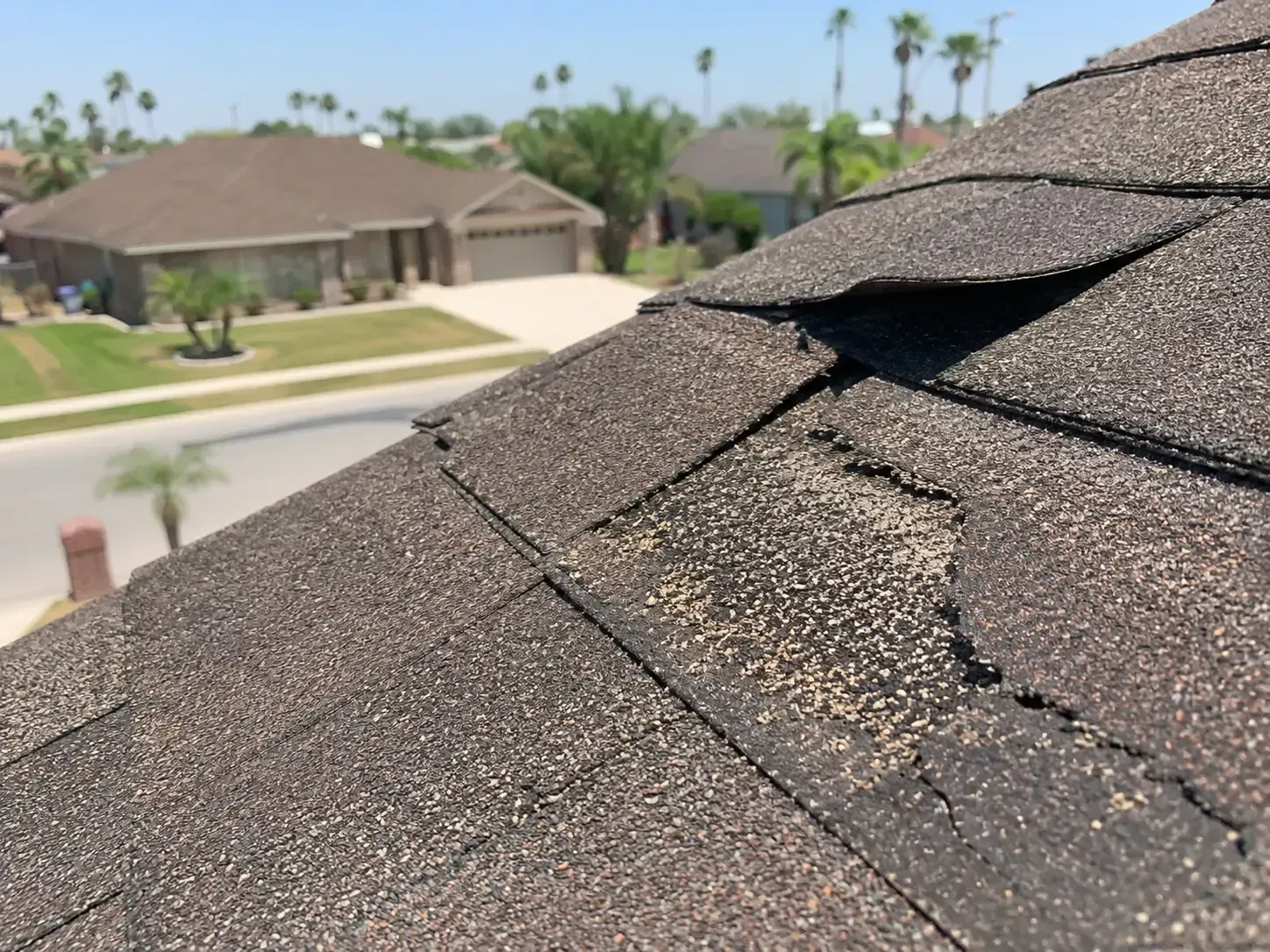
- Cracks or splits in the membrane. UV exposure and heat cycling cause membranes to crack over time, especially around seams and edges. Hailstorms across Hidalgo County add impact damage on top of normal wear.
- Interior leaks or water stains on ceiling tiles. By the time water shows up inside, it has usually been getting in for a while.
- Rising energy bills. A roof that has lost its reflective coating absorbs more heat, which means your air conditioning works harder.
- The roof is past 15 years old. Most commercial membrane systems in the RGV last 15 to 25 years depending on the material and maintenance.
If you see any of these, the next step is a professional inspection, not a guess.
What is the most common type of commercial roof?
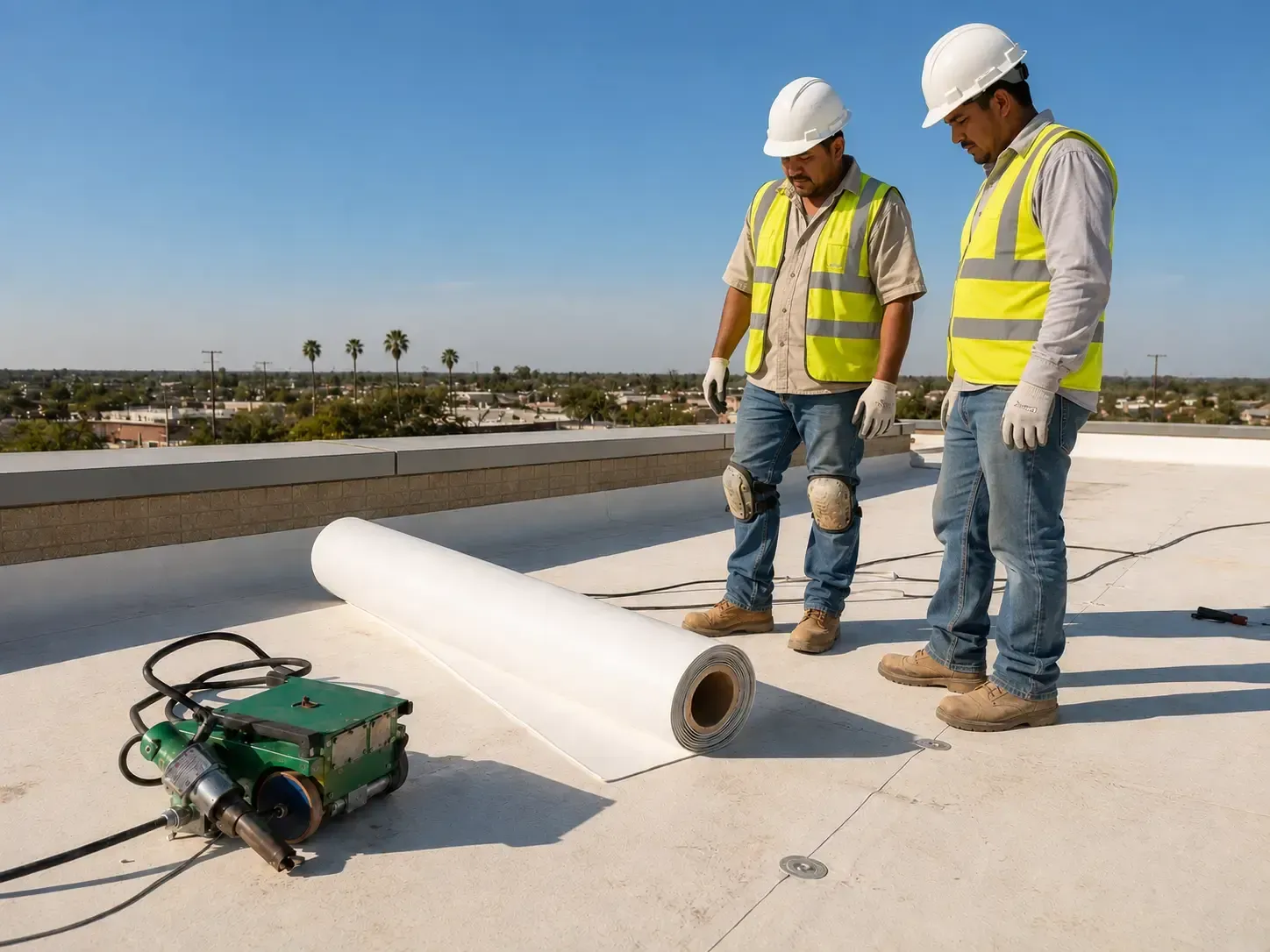
The most common type of commercial roof today is TPO (thermoplastic polyolefin) membrane — a white, reflective system that handles heat well and costs less than the alternatives. Most commercial buildings in Edinburg and across Hidalgo County use one of three systems — strip centers along Closner and McColl, warehouses, and medical and professional offices near DHR Health and UTRGV are almost all flat or low-slope, so the same handful of systems show up again and again:
- TPO (thermoplastic polyolefin). The white, reflective membrane covered above — the default choice for new commercial roofs going up today.
- EPDM (rubber roofing). A durable, flexible membrane that has been used on commercial buildings for decades. A solid choice when budget and longevity both matter.
- Modified bitumen. A multi-layer asphalt-based system, often used on smaller commercial buildings and additions.
The right system for your building depends on the roof's size, slope, existing structure, and your budget. A contractor should walk you through the options, not just quote one system.
Repair, recoat, or replace?
Three options exist for a commercial roof that's showing problems, and the right one depends on its condition:
- Repair. Makes sense for isolated issues — a small leak, a damaged seam, a section of membrane. Cost-effective when the rest of the roof is sound.
- Recoat (roof coating). A reflective coating applied over an existing membrane that is still structurally sound but worn. Extends the life of the roof at a fraction of replacement cost.
- Replace. Necessary when the membrane has reached the end of its life, when leaks are widespread, or when the decking underneath has water damage.
A roofer should inspect the entire roof, not just the problem area, before recommending which path makes sense.
What is the 25% roof rule?
Many building codes follow a 25% rule for re-roofing: if more than 25% of a roof's surface needs repair or replacement within a 12-month period, code typically requires the entire roof — or that full section — to be brought up to current code, not just the damaged part. This matters for budgeting, because a repair that looks small can trigger a much larger scope once it crosses that threshold. An inspection will tell you where your roof stands before you commit to a repair plan.
What does a commercial roofing project cost in the Rio Grande Valley?
Commercial roofing costs depend on:
- The size of the roof, measured in squares.
- The system — TPO, EPDM, and modified bitumen all price differently.
- Roof access and building height, which affect labor and equipment needs.
- The condition of the decking and insulation underneath.
Because every commercial building is different, there is no flat per-square-foot number that applies across the board. EDEL Roofing provides a free, no-obligation estimate after walking the roof and taking measurements.
What does the commercial roofing process look like?
A commercial roofing project with EDEL Roofing follows these steps:
- Inspection. We walk the roof, check drainage, and identify the cause of any problems — not just the symptoms.
- Written estimate. You get a clear estimate with the system, the price, and the timeline.
- Scheduling around your business. We plan the work to keep disruption to customers, tenants, or staff as low as possible.
- Tear-off or recoat. Depending on the scope, we remove the old system or prepare the existing one for a coating.
- Installation. The new membrane, flashing, and drainage components go in.
- Final walkthrough. We confirm the work with you and provide documentation for your records or insurance file.
Do you work with property managers and multiple buildings?
Yes. Property managers overseeing several buildings in Edinburg, McAllen, and across the Valley can set up a regular inspection schedule with EDEL Roofing so small problems get caught before they turn into emergency repairs. We also provide documentation that's useful for maintenance records and insurance purposes.
Frequently asked questions
What do commercial roofers do?
A commercial roofer inspects, repairs, recoats, and replaces flat and low-slope roofing systems on business buildings — diagnosing leaks, installing membrane systems like TPO and EPDM, and documenting roof condition for maintenance and insurance records.
How long does a commercial roof last in the Rio Grande Valley?
A well-installed and maintained commercial membrane system typically lasts 15 to 25 years, depending on the material and how well it's maintained.
What is the most common commercial roofing system in South Texas?
TPO is currently the most common choice for new commercial roofs because of its reflectivity and cost. EPDM and modified bitumen are also widely used.
Can a commercial roof be repaired instead of replaced?
Often, yes. If the damage is isolated and the rest of the roof is sound, a repair or recoat can extend the roof's life at a much lower cost than full replacement.
Do you help with insurance claims for storm or hail damage?
We inspect the roof and give you a written report of what we find, which is useful documentation for a claim. We are not a public adjuster, but we can walk you through what we observed.
How do I get a commercial roofing estimate?
Call (956) 422-3335 or book online. We'll schedule a time to walk the roof and provide a free, written estimate.
Get a free commercial roof inspection
If your building is showing any of the signs above, the next step is a professional look at the roof. See our full commercial roofing services in Edinburg or call us directly.
Call (956) 422-3335 or book an inspection online.
EDEL Roofing and Construction — Edinburg, TX, serving the entire Rio Grande Valley.